ISO 27001:2013 is an information security standard published by the International Organization for Standardization (ISO) and the International Electrotechnical Commission (IEC) under the joint ISO and IEC subcommittee. It is a specification for an information security management system (ISMS).
The recent standard ISO 27001:2013 replaced the ISO 27001:2005 standard.
Mentioned below are the significant changes:
Section 4: Context of the Organisation
- More importance has been laid on the Internal and external factors which affect the organization’s ability to achieve security objectives
Section 5: leadership
- Enhanced rigorous expectation from management
- Top Management needs to ensure integration of ISMS requirements into the organization’s processes for various functions
Section 8: Operations
- Risk assessment simplified and aligned to ISO 31000
- Risk can now be determined based on process ,technology etc. without mapping them with assets, threats and vulnerabilities
General Changes
- More emphasis on measuring and evaluating how good organisations ISMS is performing
- Preventive action is now part of PLAN phase and integrated with IS risk assessment
- Controls in Annex A have been modified to reflect the changing threat scenarios, duplications removed and are better grouped
- Separate section for cryptography
- More emphasis on outsourcing. Thus a new section on Supplier relationship
Annex A – New Controls
- A.6.1.5 Information security in project management
- A.12.6.2 Restrictions on software installation
- A.14.2.1 Secure development policy
- A.14.2.5 Secure system engineering principles
- A.14.2.6 Secure development environment
- A.14.2.8 System security testing
- A.15.1.1 Information security policy for supplier relationships
- A.15.1.3 Information and communication technology supply chain
- A.16.1.4 Assessment of and decision on information security events
- A.16.1.5 Response to information security incidents
- A.17.2.1 Availability of information processing facilities
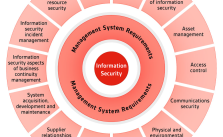
ISO 27001:2013 – Birds Eye View

Image Courtesy: http://www.bsigroup.com
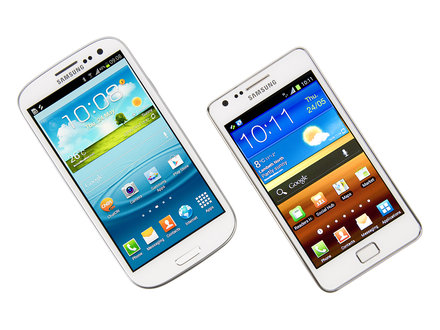 In a recent demonstration by a security researcher, it was found out that Samsung Galaxy SII and SIII smart phones were vulnerable to being remotely wiped off their memory. In this regard, for the owners of these devices the precursor is here, you may want to watch your ways, especially when opening internet links that you receive through QR, NFC or Push messages.